FAQ
What material is best for a front door?
There is no single best material, and the honest answer depends on the constraint you cannot change. If your house is listed or in a conservation area, painted timber, because composite and uPVC are frequently refused. If your opening is not a standard size, made to measure in any material. If you never want to paint anything again, uPVC or alu-clad. Start with the constraint, not the material.
Can I get a front door made to my exact size?
Yes, and it is how we make almost everything. Every made-to-measure door here is built to the dimensions you enter rather than trimmed down from a standard size. British door widths are still quoted as 2'3", 2'6", 2'9" and 3'0", and an opening in an older house is rarely exactly any of them. Measure the opening in three places and work from the smallest.
Do I need planning permission to replace my front door?
Usually not, but there are two exceptions that matter. A listed building needs listed building consent before the door is replaced. A house in a conservation area may be subject to conditions on material and design. Separately, replacing an external door is notifiable under Building Regulations, which is a different process from planning. Check both with your council before ordering.
What is the difference between a glazing bar and a mullion?
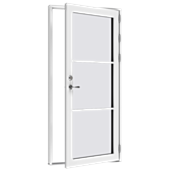
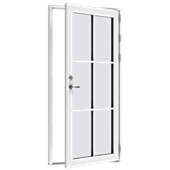
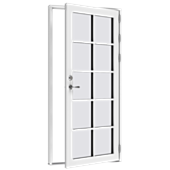
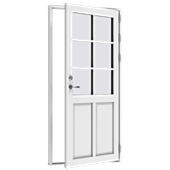
A glazing bar divides the glass visually. It is applied to the sealed unit, so the door still has one insulated pane behind a grid of bars. A mullion is a structural upright that separates two genuinely separate panes. A bar looks lighter and finer, a mullion looks heavier and more defined. On a period door the choice changes the character more than the number of panes does.
What does a light mean on a door?
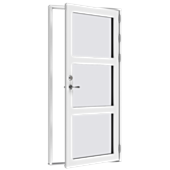
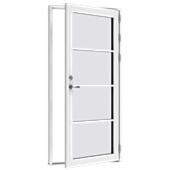
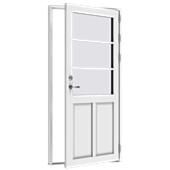
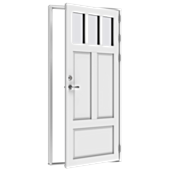
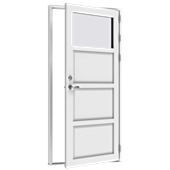
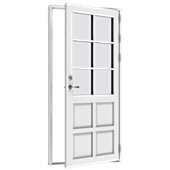
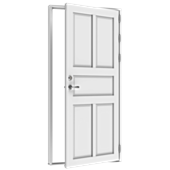
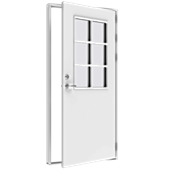
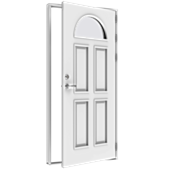
A light is a pane of glass. A nine light front door has nine panes, whether they are separated by glazing bars or by mullions. You will also see it spelled lite, which is the American form of the same word. Panels are the solid raised sections, counted separately, so a two panel four light door has two solid panels and four panes.
Do you fit the doors you sell?
No. We supply, and you or your joiner fit. Installation guides are on the site. One consequence is worth planning for: replacing an external door is notifiable under Building Regulations, and where a FENSA or Certass registered installer would self-certify, a self-fitted door has to be notified to your local authority Building Control instead. Start that before the door arrives.
{
"@context": "https://schema.org",
"@graph": [
{
"@type": "CollectionPage",
"@id": "https://www.sparwindows.co.uk/front-doors/#page",
"url": "https://www.sparwindows.co.uk/front-doors/",
"name": "Front doors",
"alternateName": [
"Entrance doors",
"External front doors",
"Front door sets"
],
"description": "Front doors made to measure in pine, alu-clad pine or uPVC, in over 100 layouts and 34 named panelled designs.",
"inLanguage": "en-GB",
"isPartOf": { "@id": "https://www.sparwindows.co.uk/#website" },
"dateModified": "[ISO-dato]",
"publisher": { "@id": "https://www.sparwindows.co.uk/#organization" }
},
{
"@type": "BreadcrumbList",
"itemListElement": [
{ "@type": "ListItem", "position": 1, "name": "Home", "item": "https://www.sparwindows.co.uk/" },
{ "@type": "ListItem", "position": 2, "name": "External doors", "item": "https://www.sparwindows.co.uk/external-doors/" },
{ "@type": "ListItem", "position": 3, "name": "Front doors" }
]
},
{
"@type": "FAQPage",
"@id": "https://www.sparwindows.co.uk/front-doors/#faq",
"isPartOf": { "@id": "https://www.sparwindows.co.uk/front-doors/#page" },
"mainEntity": [
{
"@type": "Question",
"name": "What material is best for a front door?",
"acceptedAnswer": {
"@type": "Answer",
"text": "There is no single best material, and the honest answer depends on the constraint you cannot change. If your house is listed or in a conservation area, painted timber, because composite and uPVC are frequently refused. If your opening is not a standard size, made to measure in any material. If you never want to paint anything again, uPVC or alu-clad. Start with the constraint, not the material."
}
},
{
"@type": "Question",
"name": "Can I get a front door made to my exact size?",
"acceptedAnswer": {
"@type": "Answer",
"text": "Yes, and it is how we make almost everything. Every made-to-measure door here is built to the dimensions you enter rather than trimmed down from a standard size. British door widths are still quoted as 2'3\", 2'6\", 2'9\" and 3'0\", and an opening in an older house is rarely exactly any of them. Measure the opening in three places and work from the smallest."
}
},
{
"@type": "Question",
"name": "Do I need planning permission to replace my front door?",
"acceptedAnswer": {
"@type": "Answer",
"text": "Usually not, but there are two exceptions that matter. A listed building needs listed building consent before the door is replaced. A house in a conservation area may be subject to conditions on material and design. Separately, replacing an external door is notifiable under Building Regulations, which is a different process from planning. Check both with your council before ordering."
}
},
{
"@type": "Question",
"name": "What is the difference between a glazing bar and a mullion?",
"acceptedAnswer": {
"@type": "Answer",
"text": "A glazing bar divides the glass visually. It is applied to the sealed unit, so the door still has one insulated pane behind a grid of bars. A mullion is a structural upright that separates two genuinely separate panes. A bar looks lighter and finer, a mullion looks heavier and more defined. On a period door the choice changes the character more than the number of panes does."
}
},
{
"@type": "Question",
"name": "What does a light mean on a door?",
"acceptedAnswer": {
"@type": "Answer",
"text": "A light is a pane of glass. A nine light front door has nine panes, whether they are separated by glazing bars or by mullions. You will also see it spelled lite, which is the American form of the same word. Panels are the solid raised sections, counted separately, so a two panel four light door has two solid panels and four panes."
}
},
{
"@type": "Question",
"name": "Do you fit the doors you sell?",
"acceptedAnswer": {
"@type": "Answer",
"text": "No. We supply, and you or your joiner fit. Installation guides are on the site. One consequence is worth planning for: replacing an external door is notifiable under Building Regulations, and where a FENSA or Certass registered installer would self-certify, a self-fitted door has to be notified to your local authority Building Control instead. Start that before the door arrives."
}
}
]
}
]
}